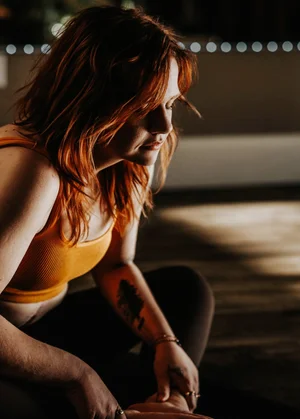
I trust myself to feel it all
Part of my work involves sitting in circle with those navigating transplant, and a variation of the story I hear time and time again is the void of whole patient care. We’re robbed of our stories, placed into a “gratitude box” where the only acceptable emotion to express is gratitude towards our donors, and our stories are monopolized by the healthcare industry. We each enter the site of trauma time and time again, with our bodies being their own trauma sites, and there is no room for the process of being human to unfold within it.
Most of what I see from people are variations of trauma responses. We lock it down and proclaim “fineness.” Because our truth - the real heaviness that comes from walking so close to death and enduring such bodily trauma and surviving - gets labeled psychotic and we’re given medication, or a psychiatric referral. Anxiety and depression are listed as common side effects of the standard medications almost all transplant recipients are on, and yet I wonder if those might also just be side effects of being a human being who has undergone such a profound event. We’ve pathologized the human experience rather than creating the space to hold it.
…
In December, after my sepsis infection, my doctors decided I needed a bile duct surgery. I had reservations, but ultimately relented, as people often do under the intense pressure of a medical system that glorifies outsourcing and puts more credibility behind white coats than it does intuition. But that’s a different story.
My intuition was onto something, and I woke up from surgery only to be told the procedure they’d been hoping to perform hadn’t been successful. The scar tissue in my body had formed a fortress, bracing and preventing the surgeon from even reaching the bile duct with adequate visibility.
When I woke up from surgery, I was clearly in pain and disoriented, and upon hearing the news that they hadn't achieved the desired outcome with absolutely no idea what came next but knowing I had overrode my boundaries, I began to sob. I can look back now and identify the response I was showing as one that was primal and deeply human.
I remember being given a sedative to stop my emotions. And I remember thinking as the medication was pushed through my IV that it wasn’t that I couldn’t handle my feelings but that I needed the space, and witnessing, to do so and there was no room for that here.
I trust myself deeply in navigating pain, and big feelings. And this moment became a master class in how the world is not set up as such. The knee jerk response by the nurse was to sedate me to stop the emotions and get me out of the recovery bay as soon as possible. It was a conveyer belt of patient care, if it can even be called care at all, and in my haze I was deeply aware that this is how the medical system fails patients.
…
When we numb our big feelings, when we rob people of fully experiencing their grief and trauma, we’re turning away from the very thing that lets us get to the other side.
What if we trusted ourselves to handle it? To feel it all, and survive? What if we didn’t need to wrap up our stories in a pretty bow but we let them be messy and human, and we knew how to walk one another through that part?
I know a few people right now training to be peer support specialists, to bring person to person care and space holding into medical spaces. I get more and more inquiries every day from people asking how they can be involved in the work I and other transplant doulas are doing in offering witness and ritual to people on their medical journeys. How can we create a space for healing that extends far beyond the walls of a hospital? How can we reclaim our bodies not as a site of trauma but as this collision point where death meets life and blossoms into something beautiful? My hope is this care will be integrated into every hospital, every transplant centre. That we find ways to honour patients as people and the gift of life becomes not just a phrase but a transition point that is marked with reverence and ceremony.
My hope is that medical care is not siloed from patient care, and that we are shown the way to develop deep trust in our bodies to know we can survive. We can feel everything, allow the primal body to express, and let it drive us deeper into wholeness.
I didn’t need anti psychotics. I needed a system that wasn’t focused on fragmenting my story and forcing fineness when it wasn’t there yet. And now I’m committed to building that world, one story at a time.