What the hospitals can’t hold
No one tells you what to do with your body after it survives.
There is no unraveling for the somatic stories we are holding built into the fabric of recovery. And yet, my body remembered.
The beeping of the IV pump, the revolving door, the strangers touching my body in the name of analytics, the lack of information that felt paralyzing, steeling my spine for more boundary violations. My nervous system did what it learned how to do in the face of this liminal space, which is to slide into collapse in an attempt to protect me from further harm.
Body trauma doesn’t leave options. There is no fighting it in a way that doesn’t also destroy self, running away isn’t an option. The way to survive involves slipping out the back door of one’s own body, leaving only a hollow shell to endure the onslaught of tests and treatments while the authentic self shelters in place.
And then you go home, more or less better than when you walked in, expected to fit back into a world that kept spinning while you occupied the 4 walls of the hospital, and there is no manual on how to integrate all of the pieces.
How do we thaw the self that has been taught a freeze state was the only thing that would provide safety? How do we heal when that message is continually reinforced?
I had been discharged, the path before me once again uncertain as options narrowed, and nothing felt finished. I’d crossed back into my life, but my nervous system stayed behind.
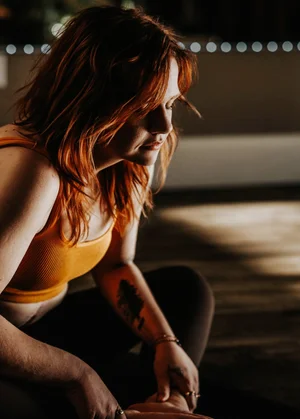
It was a frigid December morning when I lit a candle and unrolled my yoga mat to meet myself in ceremony. I needed a ritual that honoured everything I had survived. The hospital had tended to my crisis, the doctors crafting together a plan to care for my long term recovery, but I needed something to tend to the way I felt in my body. These are the roots of the somatic work - the union of both mind and body - I bring.
What had I held? What felt good about what had just occurred? What did I wish hadn’t unfolded the way it had? Where did I not use my voice when I wanted to? How were truth and trauma emerging in my body? What did my body need now?
I allowed what had been stirred in my body to move, finding a sway in my spine as I titrated safety back into a body that had taken on the shape of guarding and holding. I breathed deep, into the scar tissue that had activated to anchor into a false sense of safety when everything inside of me braced for impact. I allowed the sounds to come that had been silenced when my agreement had been valued more than my autonomy. And as I gave myself space to tap into what I’d had to suppress in the name of survival, I created room to complete the cycles I hadn’t been able to complete then.
The nature of humans is to make meaning. We attempt to understand and make sense of what has occurred. But in the liminal space of medical territory sometimes meaning is lacking. Without rational thought or linear logic, I needed to give my soma a space to feel into her stories, and settle.
For me, on this chilly morning, ceremony and ritual offered me a threshold. It marked what had just happened, and what was still yet to come, and my ability to remain throughout it all. It offered containment to the emotions and survival responses that felt too big to carry.
When I blew out the candle, something had shifted. The things I’d needed to say had been said, through sounds and movement, if only to an empty studio. I’d witnessed my own transition moment, acknowledged my own grief, held myself in the liminal space. It didn’t change anything, but it also changed everything.
This isn’t the first time I’ve marked a medical event this way. Ceremonies and rituals are woven in different ways throughout my medical journey. I created this work because I needed it. It’s something I now offer in shared space with clients who are feeling that same tender aftermath, who are craving that mind body integration after an intense period of emotion or liminality. We listen, we move slowly, and we let the body communicate on its own terms.